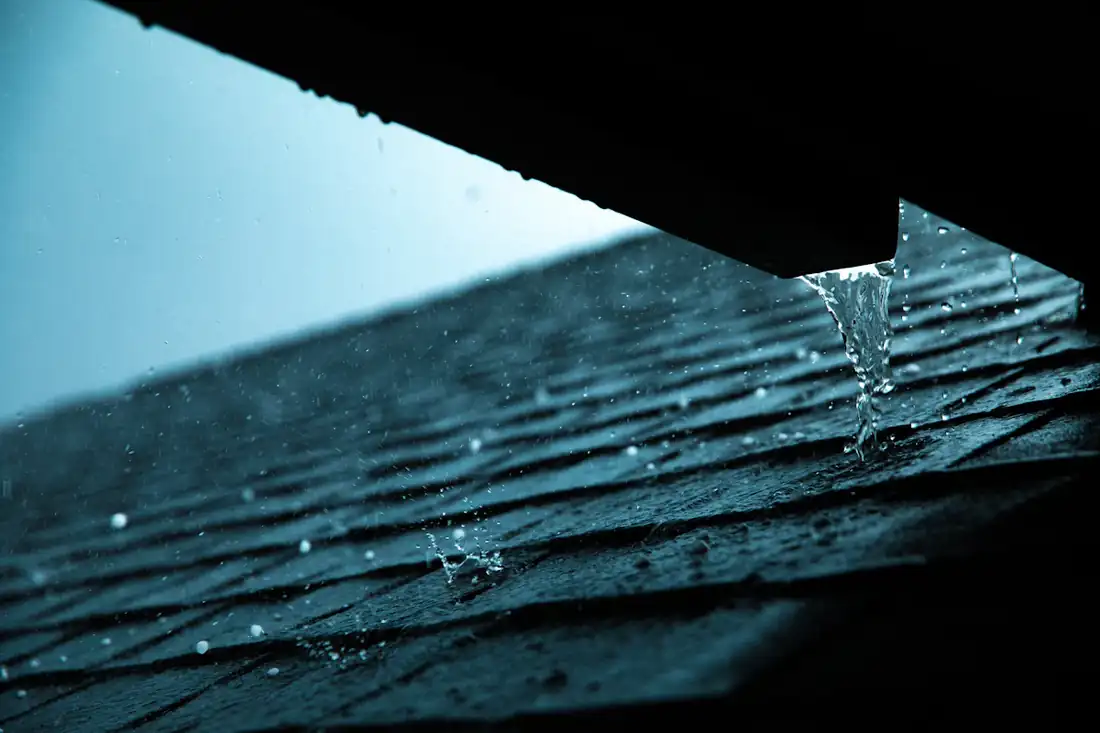
A roof is the most expensive single exterior item on most houses, and the first thing a buyer asks about. The honest answer to "how long will it last" is a range, and the range depends on the material, the installation, the shade and the weather.
What weather does on the south coast
The Lower Mainland has a long, mild, wet winter. Rain is frequent, and the roof is damp for much of the year. A few effects follow.
- Moss and algae. Shaded and north-facing slopes grow moss. Moss holds water against the shingles and lifts their edges, and the roots can work into gaps. It is the most common reason we find an asphalt roof that looks older than it is.
- Wind and storms. Winter storms bring wind that can lift shingles, and trees drop branches onto roofs and into gutters.
- Debris. Fir needles, leaves and cedar litter collect in valleys and gutters. When a valley is full, water backs up under the shingles.
- UV and summer heat. Summers here are dry, with strong sun, and that speeds up the drying and cracking of asphalt over time.
- Freeze-thaw. Less severe on the coast than inland, but it happens, and a damp roof that freezes can lose granules or crack.
Roof types and typical lifespans
These are general ranges for the south coast, not guarantees. Installation quality and maintenance can move any roof outside them. A longer list is in the component lifespans table.
| Roof type | Typical range | Common issues here |
|---|---|---|
| Asphalt shingles, basic (3-tab) | 15 to 20 years | Granule loss, curling, moss, lifted tabs |
| Asphalt shingles, architectural | 20 to 30 years | Moss, flashing failure, granule loss |
| Cedar shakes or shingles | 20 to 35 years | Moss, rot, splitting, fire risk, needs maintenance |
| Concrete or clay tile | 40 years or more | Broken tiles, failing underlay, moss |
| Metal (steel or aluminum) | 40 to 60 years | Fastener loosening, sealant, scratched coating |
| Torch-on or modified bitumen flat roof | 15 to 25 years | Ponding, seam failure, blistering |
| Built-up flat roof (tar and gravel) | 20 to 30 years | Cracks, blisters, drainage |
| Single-ply membrane (EPDM, TPO) | 20 to 30 years | Seam and penetration failure |
Where leaks usually start
The field of a roof, the open middle of a slope, is rarely where water gets in. The weak points are the details.
- Flashing at chimneys. Step flashing along the sides, and the cricket behind the chimney. Sealant and mortar fail before metal does.
- Valleys. Where two roof planes meet, carrying a lot of water.
- Skylights. Seals and flashings age faster than the roof.
- Plumbing and exhaust vents. The rubber boot around a vent pipe cracks long before the shingles are worn.
- Roof-to-wall joints. Where a roof meets a wall, a missing or short flashing leaks.
- Gutters and eaves. Overflowing gutters soak the fascia and the edge of the roof.
- Flat roof drains and scuppers. A blocked drain turns a flat roof into a pond.
An inspector looks at these first, because a roof with fifteen good years of shingle left can still leak at one bad flashing.
What an inspector can tell you
We estimate age from the type of roof, the condition of the surface, how much granule loss there is, and whether it shows signs of repairs or overlays. We note curling, cracking, missing or lifted shingles, moss, damaged flashings and sealant, and the condition of gutters. From inside, we check the attic for stains, rusted nails and daylight. We walk the roof if it is safe. On steep, wet or high roofs, we look from the ground or a ladder and say so.
We cannot give you a precise remaining life. A roof can have eight years left and fail in three, or have two years left and last five. What we can say is what condition it is in compared with what is usual for its age.
Asking the right questions
- How old is it? The seller or listing may know. A roofing invoice or a permit record is better than a guess. The date is often in the strata documents for a condo.
- Is it a tear-off or an overlay? A second layer of shingles over the first reduces life and adds weight.
- Who did it, and is there a warranty? A transferable warranty is worth having.
- What is under it? The sheathing and underlay matter as much as the surface.
- When was the moss last cleaned? And how? Pressure washing damages shingles.
Cost and planning
Roof cost depends on size, pitch, access, material and how many layers must be removed. We do not quote prices. If a roof is near the end of its life, get two written quotes from roofers before you remove subjects, and treat the quote as part of the price of the house. Insurers may also ask for the age of the roof, and some will not cover an old one at full value.
Looking after a roof
- Clear gutters and valleys in autumn and again in spring.
- Clean moss gently with a brush or an approved treatment, and do not pressure wash.
- Trim branches that overhang the roof.
- Replace vent boots and fix lifted flashings early, because small repairs are cheap.
- Have a roofer look at it every few years.
In short
On the south coast, the age of a roof matters, and the condition of its flashings and vents matters more. A roof that is old with sound details can be fine, and a young roof with bad details is not. Look at both.