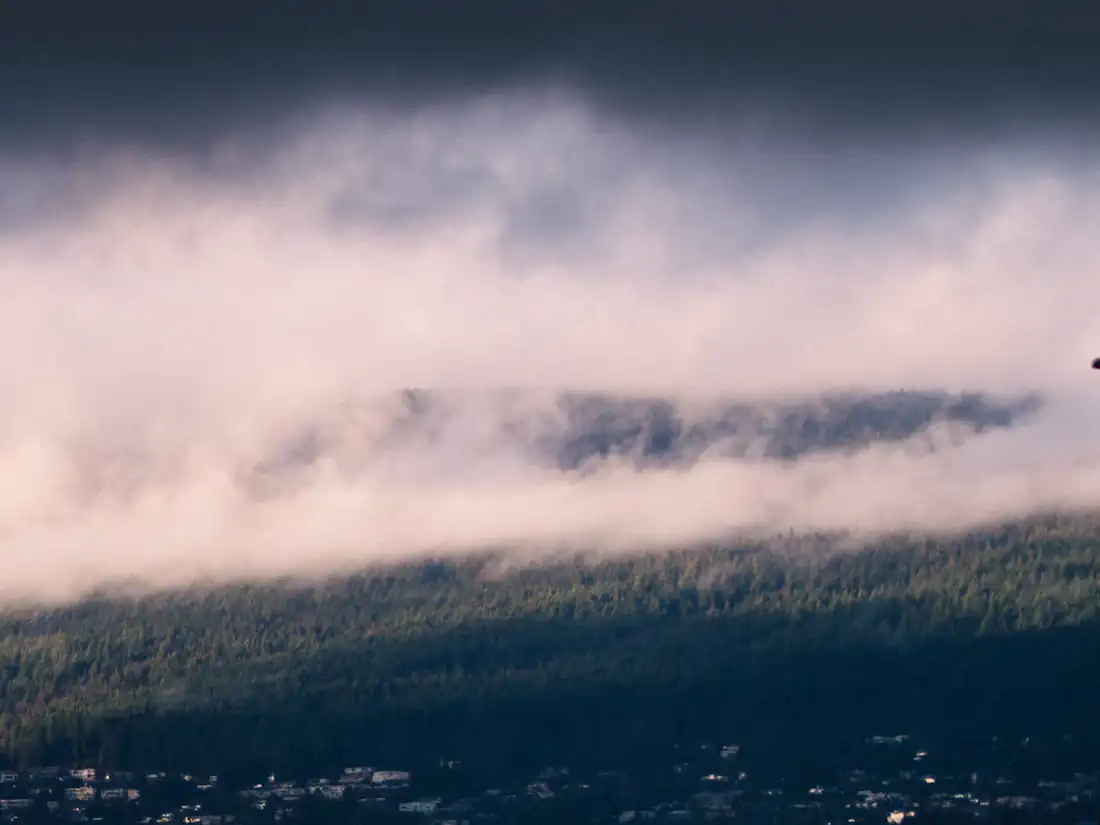
North Vancouver, both the City and the District, runs from the waterfront up the south face of the North Shore mountains. The slope is the story. It decides how water moves, how foundations are built, and what happens to a house over time.
| Feature | What it means for the house |
|---|---|
| Steep lots | Retaining walls, terraced yards, long driveways, split-level houses |
| Creeks and runoff | Water moves across and under properties, and drainage is critical |
| Mid-century houses | Post-and-beam construction with large glass areas and low-slope roofs |
| Heavy rain, dense trees | Moss, debris on roofs, and root problems |
Mid-century post-and-beam
From the 1950s through the 1970s, architects and builders on the North Shore built houses with exposed post-and-beam frames, wide overhangs, large windows and low-slope roofs. They are popular, and they have their own pattern of issues.
- Flat and low-slope roofs. Membranes, torch-on or built-up, often over a cedar or plank deck. Look at ponding, seams, drains and the edge.
- Large single-pane or early double-pane glass. Seal failure, condensation, and sill rot.
- Exposed beams and decking. Beams that run through the wall are at risk where they meet the weather.
- Radiant heating. Some houses of this era have hot water pipes in the floor. We can describe the boiler and what is visible, and we cannot see the pipes in the slab.
- Altered frames. Walls removed or openings widened over the years. Where a post-and-beam frame has been cut, we look for a proper structural fix.
Slopes, retaining walls and drainage
Houses on slopes need to handle water coming from uphill. We look at:
- retaining walls: leaning, cracking, bulging, drainage behind them, and their height
- grading around the house and the direction of water flow
- downspouts and where they discharge
- foundation walls on the uphill side, for cracks and water stains
- driveways and steps, for cracking and movement
- creeks or ditches on or near the lot
A retaining wall that is large or showing movement is a case for an engineer. We say so when we see one. Slope stability and hazards of creeks or debris flows are a matter for the municipality's information and for a geotechnical professional, and not for an inspector.
Moss, trees and roofs
The North Shore is wet, shady and tree-covered. Moss grows quickly on shaded slopes, and fir needles fill gutters and valleys. Asphalt roofs often look older than they are, and cedar roofs need attention. See roof ages and what BC weather does.
Condos and townhouses
Lonsdale, Lower Lynn and the Seylynn area have newer towers and mid-rise buildings, and there are older wood-frame buildings and townhouse complexes from the 1980s and 1990s. For a unit in one of those older buildings, see leaky condos and Poly-B plumbing.
Other things we see
- Sloped crawl spaces. One side of a house can be deep and the other almost at grade, with water flowing through.
- Basement suites. Common on the lower side of a slope.
- Oil tanks. Some older houses had oil heat. See oil tanks.
- Wood decks. Large decks on steep lots with long posts, which need a check of the connections and the footings.
Booking in North Vancouver
Phone or send a request with the address, the year built and your subject date. Access to some steep properties takes time, so please mention a steep driveway or stairs.