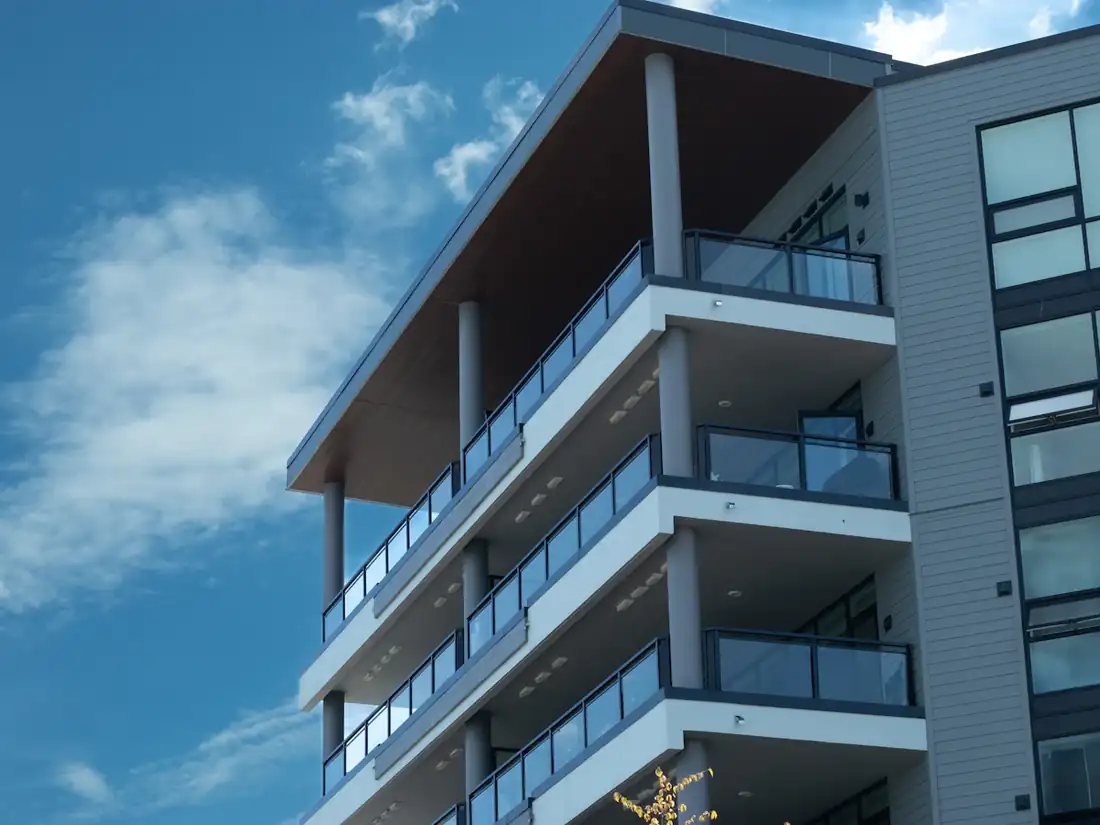
When you buy a condo you buy a unit, a share of the common property and membership in a strata corporation. A condo inspection looks mainly at the first of these. The building is mostly someone else's responsibility, and that changes what an inspection can do for you.
What is different about a condo
In a house, you own the roof, the foundation and the lot. In a strata building, the strata corporation owns and maintains the common property: the roof, the exterior walls, the structure, the parkade, the mechanical rooms and the common hallways. The strata bylaws and the strata plan decide where your unit ends and the common property begins, and it is not always where you would guess. In some buildings, balconies, windows and sliding doors are common property or limited common property. In others, the owner looks after them.
That is why an inspector walks through a condo differently.
The in-suite scope
Inside the unit, we look at:
- the electrical panel inside the unit, receptacles and switches, lighting
- plumbing fixtures, visible supply and drain lines, the water heater if it is in the unit
- heating and cooling equipment, in-suite fan coils or baseboards, thermostats, ventilation
- windows, balcony and patio doors, thresholds and sills, with a moisture meter at exterior walls
- walls, ceilings and floors for stains, cracks and movement
- kitchen and bathroom fixtures and appliances that are operable
- the fireplace, if there is one, from outside the flue
- in a townhouse, the attic and crawl space where they are part of your unit
We note signs of water entry, which is the main worry in a wood-frame building of a certain age.
The common areas we can see
We look at what is accessible to a resident: the parkade, hallways, stairwells, the mechanical room if it is open, the exterior walls from the ground, the balcony if it is yours. We do not do a building-wide review. If you want a closer look at the exterior walls, windows, decks and roofs, see strata and building envelope reviews.
What an inspection cannot tell you
The things that matter most about a condo are often in paper, not in the walls.
- The strata's finances. The contingency reserve fund, special levies, loans and the budget.
- The history. Minutes of council and general meetings show repairs, complaints, disputes and plans.
- The building's condition. A depreciation report, engineering reports and any envelope reports.
- The rules. Bylaws on pets, rentals, renovations, and noise.
- The insurance. The strata's policy and its deductible.
None of this is part of an inspection. It is a separate review, for you, your realtor and your lawyer. We are glad to look at the building-related parts of it with you if you ask. The guide on timing explains how to fit both into a short subject period.
The leaky condo question
If the building was built roughly between the early 1980s and the end of the 1990s, the first question is whether the envelope has been remediated. A unit inspection helps by looking for stains and moisture at windows, balcony doors and exterior walls, but it cannot answer the question. The documents can. The guide on leaky condos and the envelope era lists what to ask for.
Poly-B and other plumbing
Many townhouses and condos from the late 1980s and 1990s have grey Poly-B supply pipe. Inside the unit we note it and what the fittings look like. Whether the strata has a repiping plan is a question for the documents. See Poly-B plumbing.
Townhouses
A townhouse is somewhere between a house and a condo. In some complexes, you own and maintain your own roof and exterior. In others, the strata does. In all of them, the attic, crawl space and firewalls between units matter. We check the attic and the crawl space where they are part of your unit, and we look at the party wall and the exterior as far as we can see.
The report
You receive a written report with photographs, ratings on each finding, and a list of what could not be inspected. See the sample report. A condo report is shorter than a house report, and its findings are usually smaller. Water entry and plumbing materials are the items to read first.
Booking
Phone or send a booking request with the address, the building's year built, and your subject date. If we cannot answer, we are probably in a crawl space.