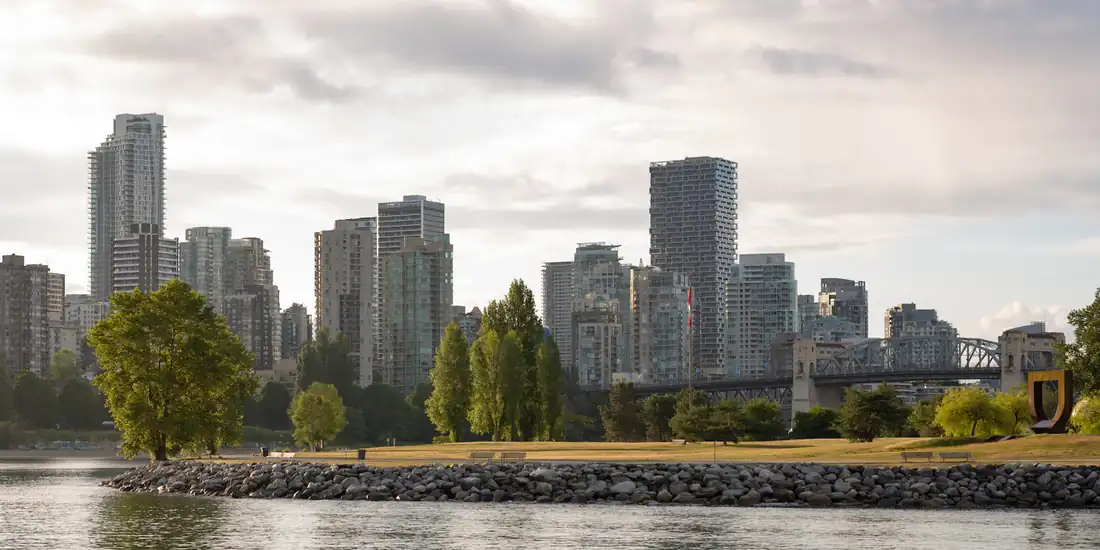
Vancouver is not one housing market. The age, the type and the ground change from one neighbourhood to the next, and so does what we look at. This page splits the city into four parts that each have a different set of usual findings. The boundaries are loose, and plenty of houses do not fit.
| Part of the city | Typical buildings | Usual focus |
|---|---|---|
| East Vancouver | 1910s to 1940s houses, Vancouver Specials, duplexes | Wiring, foundations, drains, suites |
| Kitsilano and the West Side | Edwardian and Craftsman houses, 1930s to 1950s houses, low-rise condos | Foundations, additions, lower-level suites |
| Downtown, Yaletown, Coal Harbour | Concrete towers, converted warehouses, newer mid-rise | In-suite, windows, balconies, strata documents |
| Marpole, Dunbar and the south | Mixed older houses, newer rebuilds, 1950s to 1970s homes | Drainage, additions, slopes |
East Vancouver
Neighbourhoods such as Mount Pleasant, Grandview, Hastings-Sunrise, Strathcona, Renfrew and Fraserview have a mix of early houses, bungalows and Vancouver Specials. Many early houses have been renovated more than once, often by owners, and the layers show.
- Early houses. Concrete or stone foundations that may be cracked or have had underpinning, fir framing, plaster walls. Knob-and-tube wiring is still found in attics and basements, and galvanized or old copper supply pipes with clay or cast iron drains.
- Vancouver Specials. Low roofs, stucco, aluminum windows, and a lower floor that has often been made into a suite. See Vancouver Specials: what to look at.
- Duplexes and laneway houses. A growing share, often newer, with their own questions about permits and suites.
East Van lots are often narrow, and the houses are close together, so drainage and downspouts are a recurring finding.
Kitsilano and the West Side
Kitsilano, Fairview, Point Grey, Kerrisdale, Shaughnessy and Arbutus have older character houses, many dating from the 1910s through the 1940s, along with later infill and low-rise condos.
- Character houses. Craftsman and Edwardian houses with original wood windows, cedar siding, and often a foundation that has been raised or underpinned for a basement suite. Look at the stair to the lower level, the ceiling height, and the way the floor was dug out.
- Additions. Rear additions and dormers add framing and roofing details that are often built quickly. We look at the connection between the old and the new.
- Lanes and garages. Laneway houses and detached garages, with their own wiring and drainage.
- Condos. Low-rise wood-frame buildings from the 1970s through the 1990s. For those from the late 1980s and 1990s, see leaky condos.
Downtown, Yaletown and Coal Harbour
This is mostly concrete, not wood. High-rise condos, converted warehouse lofts in Yaletown, and newer mid-rise buildings.
- The unit is the job. In a tower, the inspection covers the unit: windows, balcony door, plumbing, heating and cooling, electrical, finishes.
- Windows and balconies. Window walls and balcony doors are a common place for leaks and condensation. We use a moisture meter at the sills and thresholds.
- Heating and cooling. In-suite fan coils, baseboards and heat pumps, and ventilation.
- The building. The envelope, the parkade, the elevators and the mechanical systems belong to the strata. The documents, including the depreciation report, the minutes and the contingency reserve fund, are the way to learn about them. See condo and townhouse inspections.
- Converted warehouses. Heavy timber or concrete frames, large windows, and often unusual mechanical arrangements.
Marpole, Dunbar and the south
Marpole has older houses, mid-century infill and newer rebuilds near the Fraser. Dunbar and Southlands have houses from the 1930s onward, and many larger lots, some with a slope.
- Mixed ages. Next-door houses can be 90 years apart. Ask for the year of each addition.
- Drainage. The ground at the south edge is flatter and wetter, so crawl spaces and drains need a close look.
- Larger rebuilds. Newer homes with a lot of glass, flat roofs and decks. Check the deck and flat roof details, and the warranty period if the house is new. See new home inspections.
What is common across the city
Across Vancouver, a few findings recur: old wiring and panels, Poly-B in houses and townhouses from the late 1980s and 1990s, roof flashings, moss, wet crawl spaces and lower-level suites of uncertain status. The status of a suite is a question for the City and your lawyer. We describe what we see. The guide on building eras puts the pattern in order.
Booking in Vancouver
Phone or send a request with the address or the neighbourhood, the year built and your subject date. We travel to you.