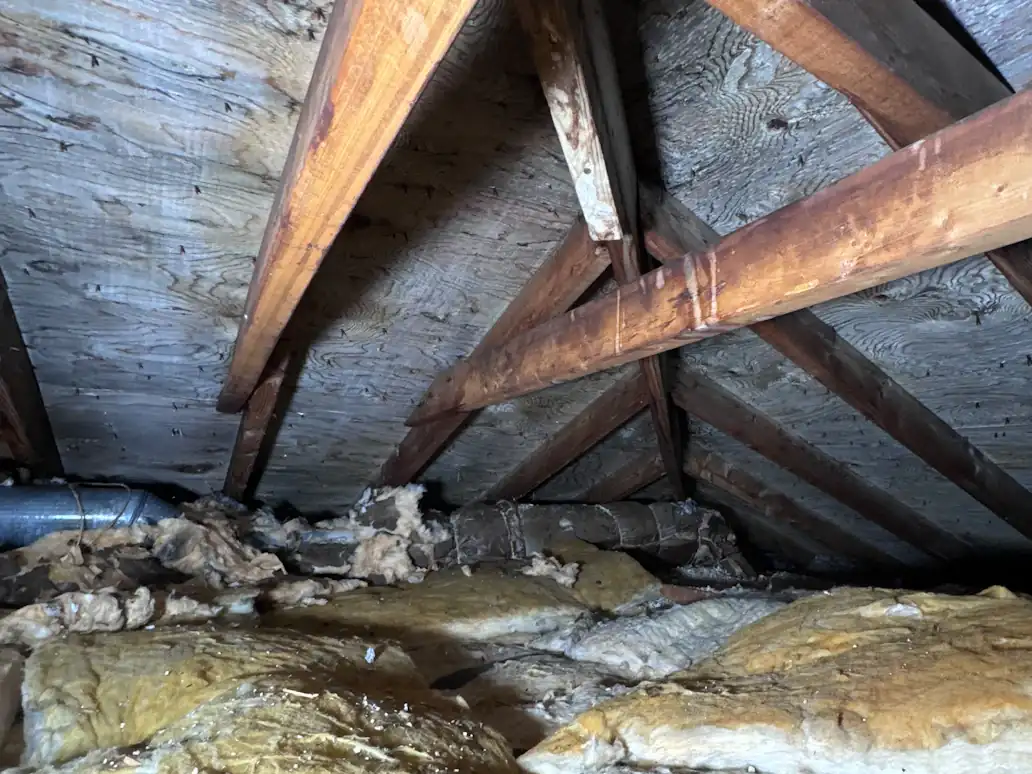
The crawl space and the attic are where the house's hidden problems collect. Water goes down and ends up in the crawl space. Warm, damp air goes up and ends up in the attic. Both are dark, cramped and unpleasant to enter, so they are rarely looked at by owners. This service is a focused inspection of one or both, without the rest of the house.
Who books it
- Owners who have a smell, a cold floor, a stain on a ceiling, or a noise in the attic.
- Owners after a leak or a flood, to see where the water went.
- Buyers who have already had a general inspection and want a closer look at one area.
- Owners planning work, such as adding insulation, replacing a roof or installing a heat pump.
- Owners asked by an insurer to confirm the state of the attic wiring or the crawl space.
- Sellers who want to know what is in there before listing.
The crawl space
We enter if there is safe access, and we look at:
- the soil: damp, bare, covered, standing water
- the ground cover: whether there is one, its condition and seams
- the foundation walls and footings: cracks, efflorescence, water lines
- floor joists and subfloor: rot, staining, signs of past leaks, moisture meter readings
- insulation: type, condition, whether it is wet or sagging
- plumbing and drains: leaks, materials, supports
- ducts: condition and connections
- vents and access doors
- pests and signs of rodents
- a sump pit and pump, where there is one
See crawl space moisture: signs and what to do for how we read what we see.
The attic
We enter if there is a hatch large enough and safe footing, and we look at:
- roof sheathing from below: stains, rot, rusty nails, daylight
- roof framing: cracks, alterations, cut members
- insulation: type, rough depth, gaps, compression, blocked eaves
- ventilation: soffit and roof vents, and whether they are clear
- bathroom and kitchen exhaust ducts: whether they reach the outside
- electrical: visible wiring, junction boxes, knob-and-tube, splices
- chimney, plumbing vent pipes and their surroundings
- fire separations and firestopping in townhouses and duplexes
- signs of animals or insects
If the attic has loose-fill insulation that looks like grey-brown pebbles or flakes, it may be vermiculite, which in older insulation products can contain asbestos. We do not disturb it or test it. We note it and recommend sampling by a qualified laboratory before anyone works there.
Limits
- If the space is too tight, blocked, flooded, or unsafe, we do not enter, and we say what we could and could not see. We may look from the hatch.
- We do not walk on ceiling drywall, and we do not move insulation beyond a limited amount at test points.
- We do not test air quality or identify mould.
- Wiring behind finishes and inside walls is not visible.
Report
You get a short written report with photographs and ratings (Safety, Major, Repair, Maintenance, Monitor), and a list of what was not accessible. The sample report shows the format. Findings from the crawl space and the attic are often tied to other parts of the house, such as grading and downspouts outside, or a roof vent, and we say so.
Combining with other work
A crawl space or attic inspection can be added to a full house inspection for a lower cost than booking separately. And if you are only looking at one area, a focused visit is quicker than a full one. Pricing and booking explains the fees.
Booking
Phone or send a request. Tell us what you have noticed, the age of the house and where the access hatches are. If the hatch is blocked, please clear it before we arrive.